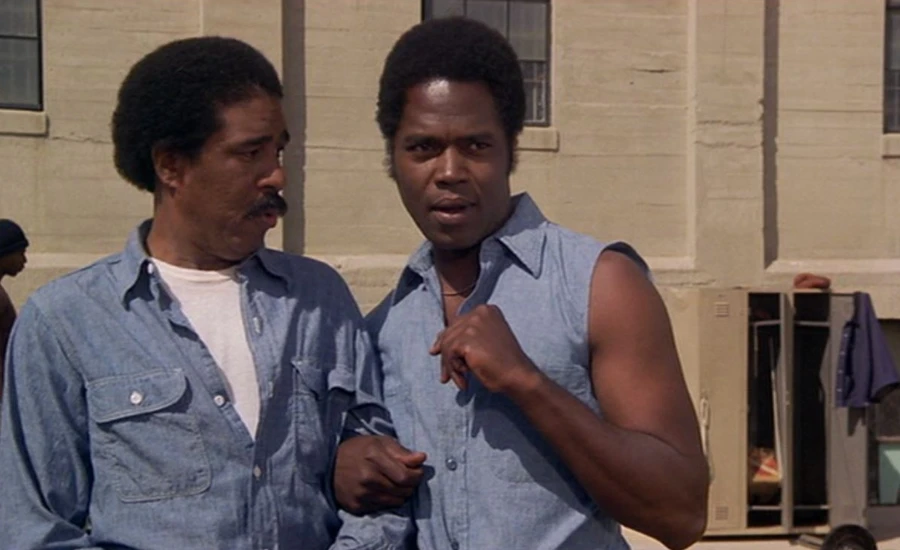

He was born in Havana. He washed floors to pay for acting school. He married a white woman one year before the Supreme Court said such marriages were legal across America. He played a police officer on television, then turned around and directed some of the most acclaimed television dramas of the 1980s.
Georg Stanford Brown did all of that, and most people today only half-remember his name.
That’s worth fixing.
Quick Bio Facts
| Detail | Information |
|---|---|
| Full Name | Georg Stanford Brown |
| Born | June 24, 1943 |
| Birthplace | Havana, Cuba |
| Heritage | Born to Jamaican immigrant parents in Cuba |
| Nationality | Cuban-American |
| Education | Los Angeles City College; American Musical and Dramatic Academy (AMDA) |
| AMDA Teacher | Philip Burton — same mentor who trained Richard Burton |
| Worked to Pay Tuition | School janitor |
| Career Active | 1966–2015 (nearly 50 years) |
| Breakthrough Role | Officer Terry Webster, The Rookies (ABC, 1972–1976) |
| Film Breakthrough | Stir Crazy (1980) — with Gene Wilder and Richard Pryor |
| Most Significant TV Role | Tom Harvey, Roots (1977) and Roots: The Next Generations (1979) |
| Emmy Win | Outstanding Directing, Cagney & Lacey (1986) |
| Emmy Nomination Revoked | Nominated for Roots (1977) — nomination withdrawn when Academy reduced nominees from 6 to 5 |
| First Directing Credit | Episodes of The Rookies (while still a cast member) |
| Other Directing | Starsky & Hutch, Hill Street Blues (2 Emmy nominations), Charlie’s Angels, Dynasty, NYPD Blue, Cagney & Lacey |
| Film Debut | How to Steal a Million (1966) — uncredited waiter |
| Notable Early Film | The Comedians (1967) with Richard Burton and Elizabeth Taylor |
| Also Known For | Bullitt (1968) as Dr. Willard |
| Wife | Tyne Daly (married 1966, divorced 1990) |
| Marriage Context | Married one year before Loving v. Virginia (1967) legalized interracial marriage nationwide |
| Daughters | Alisabeth Brown (b. 1968), Kathryne Dora Brown (b. 1971), Alyxandra Brown (b. 1985) |
| Kathryne Dora Brown | Actress, baker, preschool teacher — inherited performing instinct |
| Personal Interests | Painting, sculpture, cooking |
| Net Worth | Estimated $2–3 million (unverified) |
| Current Status | Retired from acting since 2015 |
Born in Havana, Built in Los Angeles
Georg Stanford Brown was born on June 24, 1943, in Havana, Cuba. His parents were Jamaican immigrants who had settled in Cuba before he was born.
The Havana of 1943 was a city of contradictions. Music and heat and political tension running beneath the surface. His family eventually made their way to the United States, and Georg ended up in Los Angeles.
What he brought from that particular beginning, Cuban-born, Jamaican-rooted, landing in mid-century America, was a specific kind of awareness about identity and belonging that would shape the risks he took in his career and in his personal life.
Washing Floors to Get Into Acting School
He enrolled at Los Angeles City College and then at the American Musical and Dramatic Academy, known as AMDA. AMDA was a serious institution. Getting in required talent. Staying in required money he didn’t have.
So Georg worked as a school janitor to pay his tuition. He mopped and swept and cleaned while learning Shakespeare and stage movement. There’s a specific kind of resolve in that combination. You have to want something pretty badly to clean floors by day and rehearse monologues by night.
At AMDA, he trained under Philip Burton, a theatre director who was also the mentor behind Richard Burton’s training. That lineage placed Georg in a specific theatrical tradition, technical, classical, and rigorous.
And at AMDA, he met Tyne Daly.
The Most Consequential Meeting in His Personal Life
Tyne Daly was also studying at AMDA. She would go on to become one of the most recognized actresses in American television, most famously as Mary Beth Lacey in Cagney & Lacey from 1982 to 1988.
But when Georg and Tyne met in acting school, neither of them was famous. They were just two young performers training hard in Los Angeles.
They fell in love.
In 1966, they got married. That timing matters enormously.
In 1966, interracial marriage was still illegal in many American states. The Supreme Court case Loving v. Virginia, which struck down all anti-miscegenation laws across the country, wasn’t decided until 1967. Georg Stanford Brown and Tyne Daly married one year before that ruling made their union legal everywhere in America.
That was not a neutral act. That was a deliberate choice to live by their own truth at a moment when the law and large sections of society were explicitly hostile to what they were doing.
The First Screen Steps
Brown’s first screen appearance came in 1966 in How to Steal a Million, a heist comedy starring Audrey Hepburn and Peter O’Toole. He played an uncredited waiter. He wasn’t even credited for the role.
The following year, something more significant arrived. He was cast as Henri Philipot, a Haitian rebel leader, in The Comedians (1967), starring Richard Burton and Elizabeth Taylor. Getting a real speaking role in a film that significant, in front of two of the biggest stars on Earth, was not a small thing for a relatively new actor.
From there came Dayton’s Devils (1968) and then Bullitt (1968), the Steve McQueen car chase thriller that became a landmark of American action cinema. Georg played Dr. Willard in Bullitt, a smaller role in a very big film.
Television pulled him in more strongly during the late 1960s. He appeared in Dragnet, Here Come The Brides, The Bold Ones, Mannix, and Mission: Impossible among others, building a steady resume of recognizable credits across the major shows of the era.
The Rookies: Four Seasons of Being Terry Webster
In 1972, producer Aaron Spelling cast Georg Stanford Brown as Officer Terry Webster in The Rookies. The show followed three young police officers finding their footing in a demanding, morally complex world.
Georg played Terry Webster for four seasons, from 1972 to 1976. The show was a legitimate hit for ABC. Terry Webster became one of the first Black police officers depicted with ongoing regularity and full humanity in a major American network drama.
During the run of the show, something happened between Georg and Tyne that deserves specific mention. They acted together in an episode of The Rookies. In the course of the episode, their characters shared a kiss. This was one of the first depictions of an interracial kiss on American prime-time network television.
Television executives told them to remove the scene.
They refused.
They stood together and made clear the scene was staying. And it stayed.
That moment, two actors who had chosen each other against legal and cultural resistance, refusing to erase that choice for the comfort of broadcasting executives, is one of the underreported acts of courage in American television history.
Starting to Direct — While Still Acting
Something else happened during The Rookies that was just as significant as the acting work: Georg started directing.
He directed several episodes of the show while he was still a series regular in it. Being a member of the cast didn’t stop him from moving behind the camera to direct his colleagues. That crossover, from actor to director within the same production, required the kind of confidence and organizational intelligence that directing demands.
He wasn’t finished with acting. But he had found something he also needed to do.
Roots: Tom Harvey, and a Nomination That Disappeared
When The Rookies ended in 1976, Georg landed a role in one of the most significant pieces of American television ever produced. Alex Haley’s Roots aired in 1977 across eight consecutive nights on ABC. The miniseries followed a family line from Africa through American slavery and its aftermath, tracing specific lives across generations.
Georg played Tom Harvey, a character who sits across multiple generations in the Haley family tree. The generational logic of the story created some striking real-life age mismatches in the casting — the actors playing his father and grandmother were both close to Georg’s own age in reality, which says something interesting about how television production and genealogical drama sometimes don’t quite line up when you do the math.
The performance drew enough attention that the Emmy Awards nominated Georg for Outstanding Performance. Then something unusual happened. That year, the Academy of Television Arts and Sciences decided to reduce the number of nominees in certain categories from six to five. Georg’s nomination was one that was withdrawn in the process.
He had been nominated. The nomination was then removed before he could compete.
He returned for Roots: The Next Generations in 1979, where he reprised the Tom Harvey role and also stepped into the director’s chair for episodes of that sequel production.
Stir Crazy and the Film Side
In 1980, Georg appeared in Stir Crazy, the comedy directed by Sidney Poitier and starring Gene Wilder and Richard Pryor. The film centered on two friends wrongly convicted of a crime and thrown into a maximum-security prison. Georg was third-billed, playing Rory Schultebrand, one of the inmates.
Stir Crazy was a massive box office success. It became one of the highest-grossing comedies of that year. Being part of that cast gave Georg’s film profile another strong credit alongside the television work that had become the main arena of his career.
The 1986 Emmy: Making History as a Director
The years between Roots and the mid-1980s saw Georg directing more and more frequently. He went on to direct episodes of Starsky & Hutch, Charlie’s Angels, Hill Street Blues, Dynasty, and several other television series. His work on Hill Street Blues earned him two Emmy Award nominations for directing.
Then came Cagney & Lacey.
Cagney & Lacey was the series that helped establish his former wife, Tyne Daly, as a television star. Directing a show led by an ex-spouse is a situation few directors ever encounter, yet Georg approached it professionally and delivered acclaimed work. In 1986, the Television Academy honored him with the Emmy Award for Outstanding Directing for one of his Cagney & Lacey episodes.
That win placed him among the first African American directors to receive that recognition in dramatic prime-time television. The Emmy he won was in the same category where he had previously been nominated and then had his nomination revoked for Roots. Nine years later, the award came.
He continued directing into the 1990s, working on NYPD Blue, Dynasty, and various television movies including Alone with a Stranger and Dying to Remember.
The Marriage That Made History, and Then Ended
Georg and Tyne Daly’s marriage lasted twenty-four years, from 1966 to 1990. They had three daughters together: Alisabeth Brown, born in 1968, Kathryne Dora Brown, born in 1971, and Alyxandra Brown, born in 1985.
Their youngest daughter Alyxandra was born fourteen years after their eldest. That span of birth years means Georg and Tyne were still building their family right through the height of both their careers — through The Rookies, through Roots, through Cagney & Lacey’s run.
The marriage ended in 1990. Tyne Daly spoke in later interviews about the external pressures of being in an interracial marriage during decades when that still attracted hostility from various directions, including from within the entertainment industry itself. Georg has reflected that acting was something he felt he fell into rather than chose with deliberate intent. Both of them built careers that demanded enormous personal investment, and the costs of that over twenty-four years eventually exceeded what the marriage could hold.
Their daughters represent the generation they built together. Alisabeth works with ceramics and glass art. Kathryne Dora Brown became an actress and also worked as a baker and preschool teacher. Alyxandra has kept her life more private.
The Craft Life Alongside the Career
Away from screens and sets, Georg Stanford Brown has maintained creative practices that have nothing to do with Hollywood.
He is a serious painter and sculptor. He has described visual art as a separate form of expression that his performing career couldn’t satisfy on its own. The painter and the actor and the director are three different versions of the same impulse: find a way to make something real out of imagination.
He is also known as an accomplished cook who finds satisfaction in hosting people around food. The domestic creativity of cooking, like the visual creativity of painting, suggests someone who needed to make things with his hands in multiple dimensions.
Later Career and Stepping Back
Following his Emmy victory in 1986, Georg remained active as a television director throughout the 1990s. His acting work became more sporadic: a role in House Party 2 (1991), episodes of Malcolm & Eddie, The District, and Nip/Tuck in the 2000s. His final credited role appears to have been in 2015.
His final credit was in the television movie Mystery Woman: Vision of a Murder in 2005 according to some sources. According to IMDb, his credited career spans from 1966 through 2015.
Since then, he has largely stayed out of the public eye, with no verified social media accounts linked to him. As of 2026, he is 82 years old.
Also Read: Gabriel Howell
Final Words
Georg Stanford Brown was born in Havana to Jamaican parents and ended up cleaning floors in Los Angeles to pay for acting training. He married a white woman one year before the Supreme Court said that was legal everywhere in America. He built a four-season run as a Black police officer at a time when that kind of sustained Black television presence was genuinely rare. He played a man in the generational chain of Alex Haley’s ancestors in one of the most watched television events in American history. He directed his way to an Emmy in the show where his former wife was a star.
All of that happened across a career that ran nearly five decades and is still, somehow, less remembered than it should be.
The janitor who mopped floors at AMDA became one of the first Black directors to win an Emmy for dramatic television. That’s a story worth knowing fully.
Frequently Asked Questions
1. Who is Georg Stanford Brown?
Georg Stanford Brown is a Cuban-American actor and director born in Havana, Cuba on June 24, 1943. He is best known for playing Officer Terry Webster in The Rookies (1972–1976) and Tom Harvey in Roots (1977). He won the Emmy Award for Outstanding Directing in 1986 for his work on Cagney & Lacey.
2. Where was Georg Stanford Brown born?
He was born in Havana, Cuba, on June 24, 1943. His parents were Jamaican immigrants living in Cuba at the time. He later moved to the United States and settled in Los Angeles.
3. How did Georg Stanford Brown get into acting?
He studied at Los Angeles City College and then at the American Musical and Dramatic Academy (AMDA) in New York. He worked as a school janitor to pay his tuition. Six months after finishing his studies, he began acting on stage, then transitioned to film and television.
4. Who did Georg Stanford Brown study under at AMDA?
He trained under Philip Burton, a renowned theatre director who was also the mentor who trained Richard Burton.
5. What is The Rookies and what role did Georg play?
The Rookies was an ABC police drama produced by Aaron Spelling that ran from 1972 to 1976. Georg played Officer Terry Webster, one of three central characters, across all four seasons.
6. Who is Tyne Daly and how did she meet Georg Stanford Brown?
Tyne Daly is an acclaimed actress best known for playing Mary Beth Lacey in Cagney & Lacey (1982–1988). She met Georg while both were students at AMDA. They married in 1966 and divorced in 1990, having three daughters together.
7. Why was their marriage significant?
They married in 1966, one year before the Supreme Court’s 1967 Loving v. Virginia decision struck down laws prohibiting interracial marriage across the United States. Their marriage at that time was a genuine act of personal courage against legal and social resistance.
8. Did Georg Stanford Brown and Tyne Daly act together?
Yes. They appeared together in an episode of The Rookies where their characters shared a kiss — one of the first interracial kisses depicted on prime-time American television. When network executives requested the scene be removed, both actors refused and the scene remained.
9. What role did Georg play in Roots?
He played Tom Harvey, described as the great-grandson of Kunta Kinte and the great-grandfather of author Alex Haley, in the 1977 miniseries Roots. He reprised the role in Roots: The Next Generations (1979), where he also directed episodes.
10. What happened with his Emmy nomination for Roots?
Georg was nominated for an Emmy Award for his performance in Roots. That year, the Television Academy reduced the number of nominees in certain categories from six to five. His nomination was among those withdrawn before the ceremony took place.
11. When did Georg Stanford Brown win an Emmy?
He won the Primetime Emmy Award for Outstanding Directing in 1986 for his work on Cagney & Lacey, making him one of the first African American directors to receive that recognition in dramatic prime-time television.
12. What other shows did Georg Stanford Brown direct?
His directing credits include episodes of Starsky & Hutch, Charlie’s Angels, Hill Street Blues—which earned him two Emmy nominations—Dynasty, and NYPD Blue. He also directed television films such as Alone with a Stranger and Dying to Remember.
13. How many children does Georg Stanford Brown have?
He has three daughters with Tyne Daly: Alisabeth Brown (born 1968), who works with ceramics and glass art; Kathryne Dora Brown (born 1971), who became an actress; and Alyxandra Brown (born 1985).
14. What are Georg Stanford Brown’s interests outside of performance?
He is a serious painter and sculptor who has maintained visual art practice throughout his life. He is also known as an accomplished cook who enjoys hosting people around food.
15. Is Georg Stanford Brown still acting?
His last credited role appears to be around 2005–2015 depending on the source. He has been largely out of public life since stepping back from the industry. He is 82 years old in 2026.
Read Comprehensive Profiles Of Famous Personalities On Discover Released.