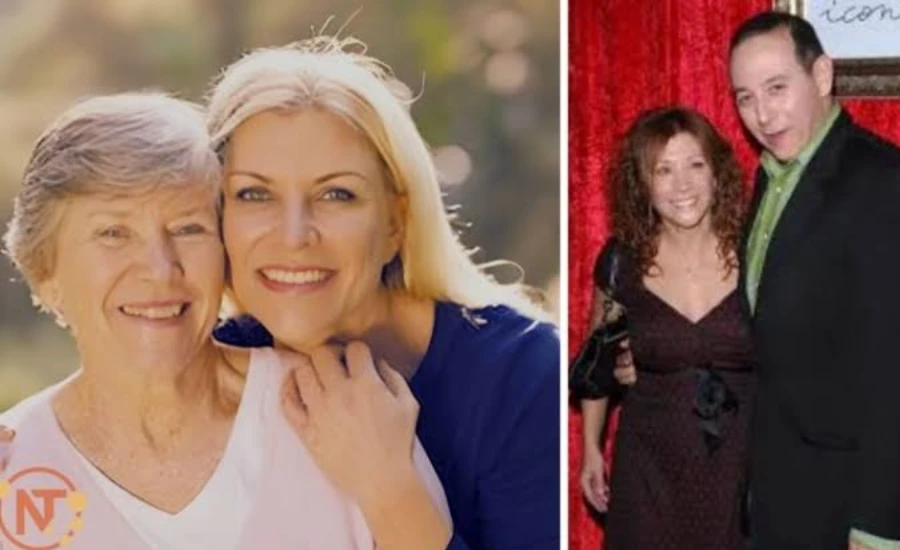

Some people spend their whole lives chasing wealth and never get close to it. Chandi Heffner never chased it at all, and it found her anyway, through one of the strangest legal arrangements in American history. A tobacco heiress adopted her as an adult daughter, believing she might be the reincarnation of a baby who died decades earlier. Then it all fell apart, spectacularly, in front of the entire country.
Quick Facts Table: Chandi Heffner at a Glance
| Detail | Information |
|---|---|
| Birth Name | Charlene Gail Heffner |
| Chosen Spiritual Name | Chandi, Sanskrit for “divine feminine energy” |
| Born | August 26, 1953 (some sources vaguely cite 1956) |
| Birthplace | Baltimore, Maryland |
| Age (as of 2026) | 72 or 73, depending on which birth year is accurate |
| Father | William J. Heffner, attorney and commercial banker |
| Mother | Barbara Heffner, nurse |
| Siblings | Sister Claudia Heffner (confirmed); a sister named Holly is mentioned in some sources |
| Religious Movement | Hare Krishna (ISKCON), joined in the early 1970s |
| Adoptive Mother | Doris Duke, tobacco and hydroelectric power heiress |
| Adoption Date | 1988, at the Somerset County Courthouse, Somerville, New Jersey |
| Age at Adoption | Approximately 35 |
| Doris Duke’s Age at Adoption | 75 |
| Relationship Soured | Around 1991 |
| Doris Duke’s Death | October 28, 1993 |
| Estate Value in Dispute | Reported at approximately $1.2 billion |
| Settlement Reached | 1995–1996, reportedly between $65 million and $65.8 million |
| Relationship With Paul Reubens (Pee-wee Herman) | A “mock wedding” in the late 1980s, never a legal marriage |
| Current Activities | Runs the CDHIF USA Foundation; operates an animal rescue ranch in Waimea, Hawaii |
| Current Residence | Splits time between Hawaii and India |
| Estimated Current Net Worth | Wildly inconsistent across sources, ranging from $20 million to $65 million |
A Quiet Start in Baltimore
Chandi Heffner was born Charlene Gail Heffner, reportedly on August 26, 1953, in Baltimore, Maryland. Her father, William J. Heffner, worked as an attorney and in commercial banking. Her mother, Barbara, worked as a nurse.
By every account, this was an ordinary, middle-class Catholic household, nothing that hinted at the extraordinary path her life would eventually take. She grew up with at least one sister, Claudia, and possibly another named Holly, depending on which source you check.
Walking Away From Baltimore
In the early 1970s, Charlene left her Baltimore life behind and moved to Hawaii. There, she became deeply involved with the Hare Krishna movement, joining a communal farming community built around the group’s spiritual practices.
It was during this period that a guru gave her a new name: Chandi, a Sanskrit word meaning “divine feminine energy” or “powerful goddess.” She embraced meditation, simple communal living, and Eastern philosophy, moving about as far from her Catholic Baltimore upbringing as a person could get.
A Life Built Around Dance and Devotion
Alongside her spiritual practice, Chandi developed real skill as a belly dancer, training under multiple instructors over the years. This wasn’t just a hobby. It became a meaningful part of her identity and, eventually, the exact connection that would change her entire life.
She lived simply during these years, focused on meditation, dance, and communal service, seemingly content far away from wealth or public attention.
Meeting Doris Duke
Here’s where the accounts genuinely start to differ, and it’s worth being upfront about that. Some sources describe Chandi and Doris Duke meeting through a shared belly dancing instructor named Bobby Farrah. Others describe them meeting at a yoga or dance class in Hawaii. Still others place their meeting specifically in early 1984, while Chandi was living on a Hare Krishna commune, or say they met directly at Duke’s Honolulu estate, Shangri-La.
These aren’t small discrepancies. They describe genuinely different circumstances for how these two women first crossed paths. This article isn’t going to pretend one version is definitively correct when the available sources simply don’t agree.
A Bond Built on Shared Interests
Whatever the exact circumstances, Chandi and Doris Duke connected over genuinely shared interests: dance, Eastern philosophy, and a deep love of animals. Duke reportedly invited Chandi to her Shangri-La estate for Reiki healing, related to a knee injury Chandi was recovering from at the time.
Doris Duke was no ordinary wealthy woman. She had inherited a massive fortune from her father, James Buchanan Duke, founder of the American Tobacco Company, and was widely known as “the richest girl in the world.” By 1985, Chandi had become her constant companion.
The Reincarnation Belief Behind the Adoption
One of the most striking details in Chandi’s story involves why Doris Duke chose to adopt her. According to multiple sources, Duke believed Chandi might be the reincarnation of her own biological daughter, Arden, who had died shortly after birth back in 1940.
Doris Duke’s genuine belief in reincarnation is well documented in broader historical accounts of her life, which lends some real credibility to this specific detail, even though it understandably raised eyebrows among Duke’s inner circle at the time.
An Adult Adoption That Stunned Everyone
In 1988, at the Somerset County Courthouse in Somerville, New Jersey, Doris Duke legally adopted Chandi Heffner. Chandi was approximately 35 years old. Duke was 75.
Adult adoptions are genuinely rare, and this one raised immediate questions given the enormous wealth involved. Some viewed it as a beautiful, unconventional expression of love between two women who’d found real connection. Others viewed it with real suspicion, wondering whether Chandi had positioned herself carefully for an eventual financial windfall.
Life Inside Extraordinary Wealth
After the adoption, Chandi’s life changed completely. Doris Duke purchased a 290-acre horse ranch in the Kohala Mountains of Hawaii, reportedly worth around $1.5 million at the time, and Chandi eventually took on an advisory role regarding the heiress’s finances.
Duke also made Chandi the executor of her will during this period, a significant legal responsibility that showed just how deeply she’d come to trust her adopted daughter, at least for a time.
When the Relationship Fell Apart
Around 1991, everything between Chandi and Doris Duke turned bitter. The specific reasons for the falling out aren’t fully documented across reliable sources, but the outcome was clear: Chandi was cut from Duke’s will and effectively disinherited.
Given how central Chandi had become to Duke’s daily life and finances, this must have been an enormous, disorienting reversal, going from trusted daughter and executor to someone removed entirely from the family’s future plans.
Doris Duke’s Death and the Legal Battle That Followed
Doris Duke died on October 28, 1993. With Chandi already cut from the will, a massive legal battle erupted over the estate, reportedly valued at approximately $1.2 billion.
Chandi believed she deserved a share of that fortune and pursued legal action to secure it. The case became a genuine media sensation throughout the early-to-mid 1990s, exposing the complicated, messy intersection of wealth, family loyalty, and legal maneuvering playing out in full public view.
The Settlement That Ended the Fight
After years of legal proceedings, Chandi reached a settlement with Duke’s estate in 1995 or 1996. Sources cite the amount slightly differently, somewhere between $65 million and $65.8 million.
That’s a genuinely enormous sum of money by any normal standard. But compared to Duke’s full $1.2 billion estate, it represented only a small fraction of what Chandi might have received had she remained the legally recognized daughter and heir.
The Media Narrative That Followed Her
In the early 1990s, media coverage largely painted Chandi as a manipulator, framing her as a Hare Krishna devotee who had cunningly maneuvered an elderly, vulnerable woman into an adoption purely for financial gain. That narrative was dramatic, convenient, and widely repeated.
But that framing also conveniently ignored the genuinely documented warmth of the earlier years between Chandi and Duke, along with Duke’s own clear agency in choosing to adopt her in the first place. Media narratives about women and inherited wealth have a well-documented history of calcifying into simple, convenient stereotypes, and Chandi’s story appears to be a clear example of exactly that pattern.
The Paul Reubens Connection, Clarified
Chandi has often been referred to online as the “alleged wife” of actor Paul Reubens, widely known for playing Pee-wee Herman. This framing is genuinely misleading, and it deserves direct correction.
According to reliable reporting, Chandi and Reubens met through a mutual friend and held a playful “mock wedding” at a dinner party in the late 1980s, reportedly around 1989. This was never a legally binding marriage. Despite persistent rumors, their actual romantic relationship reportedly never developed into anything serious beyond that lighthearted, symbolic ceremony.
A Confusing Detail About Marriage
Interestingly, a few sources claim Chandi “has been married and divorced” at some point in her life, while also stating she has no children. None of these sources name an actual husband, and none provide any further verifiable detail about this claimed marriage.
Because the available information is so limited—and no spouse or clear timeline has ever been identified—this article approaches that claim cautiously instead of treating it as an established fact.
A Single, Unconfirmed Claim About a Bodyguard
One source, and only one among those reviewed for this article, claims Chandi was also romantically involved with James Burns, described as Doris Duke’s former bodyguard, and that the relationship later ended in a palimony lawsuit. No other reliable source confirms this particular claim.
Because this detail appears in just one place, without any additional confirmation elsewhere, this article flags it clearly as unverified rather than repeating it as an established fact of her biography.
Building a New Life After the Settlement
Following her settlement, Chandi stepped back from public life and moved toward something quieter and more purpose-driven. She founded the CDHIF USA Foundation, reportedly around 1998, based in Waimea, Hawaii.
The foundation’s stated mission involves supporting impoverished communities in India and providing medical care for both people and animals. Some sources claim the foundation assists over 80,000 patients annually in India, though this specific figure appears consistently only across sources that otherwise share identical, templated language, making it difficult to independently verify.
A Ranch Full of Rescued Animals
Alongside her foundation work, Chandi operates an animal rescue ranch in Waimea, Hawaii. She cares for rescued horses, donkeys, birds, pigs, and other animals, reportedly developing a particular love for horses that eventually led her toward equestrian activities as well.
This work connects clearly back to her earlier life, long before Doris Duke ever entered the picture, when animals and Eastern spiritual values were already central to how she chose to live.
A Life Split Between Two Countries
As of recent reporting, Chandi divides her time between Hawaii and India, splitting her efforts between her animal rescue work at home and her foundation’s humanitarian projects abroad. She’s now reportedly in her seventies, living what’s consistently described as a private, quiet, spiritually grounded life.
That’s a genuinely striking contrast to the version of her life that dominated newspaper headlines throughout the early-to-mid 1990s.
The Confusing Question of Her Current Net Worth
Here’s something worth being completely honest about. Sources disagree significantly on Chandi’s current net worth. Several state it’s around $20 million today. At least one other source claims it’s closer to $65 million, essentially treating her original settlement amount as unchanged over the past three decades.
Given how dramatically these figures differ, and the complete absence of any verified, primary financial disclosure, this article treats all current net worth figures for Chandi as rough, unconfirmed estimates rather than settled fact.
A Genuine Word of Caution About This Topic
It’s important to be direct about something unusual in the research for this specific article. An extremely high number of the websites covering Chandi Heffner’s story contain nearly identical sentences and paragraph structures, even across supposedly unrelated domains.
This strongly suggests that most current online coverage of her life traces back to the same original template or content source, republished repeatedly with only minor rewording. That doesn’t necessarily make the underlying facts wrong, since the core story does appear to trace back to genuine, historically documented events from the 1990s Doris Duke estate case. But it does mean that most modern web content about her offers far less independent verification than it might initially appear to.
Why Her Story Still Gets Told
Chandi Heffner’s life touches on themes that never really go out of style: sudden, unexpected wealth, a complicated inheritance battle, questions about genuine love versus financial motivation, and an eventual pivot toward quiet philanthropy after enormous public scrutiny.
Her story also offers a specific lesson about how media narratives can flatten complicated women into simple villains, especially when enormous sums of money are involved. The full picture of her relationship with Doris Duke was clearly more complicated than the “manipulator” label the media largely settled on during the height of the controversy.
Also Read: Samantha Struthers Rader
Final Words
Chandi Heffner’s life moved from a Baltimore Catholic household to a Hawaiian Hare Krishna commune, then into the extraordinary, complicated world of one of America’s wealthiest families, and finally into a quieter existence built around animal rescue and humanitarian work spanning two countries.
Along the way, she lost a mother figure under bitter circumstances, fought a legal battle covered by national media, and eventually chose a life defined far more by service than by the wealth that once made her famous. Whatever judgment history ultimately settles on regarding her true motivations, her actual path forward, choosing philanthropy and quiet animal rescue work over continued public attention, speaks for itself.
FAQ About Chandi Heffner
Q1. Who is Chandi Heffner?
She is best known as the adopted adult daughter of tobacco heiress Doris Duke, a relationship that led to a highly publicized inheritance dispute in the early 1990s.
Q2. What was Chandi Heffner’s birth name?
She was born Charlene Gail Heffner, reportedly on August 26, 1953, in Baltimore, Maryland, though some sources vaguely cite a 1956 birth year instead.
Q3. Why is she called “Chandi”?
A Hare Krishna guru gave her that name in the early 1970s. It’s a Sanskrit word meaning “divine feminine energy” or “powerful goddess.”
Q4. How did Chandi Heffner meet Doris Duke?
Sources disagree on the specifics, variously describing their meeting through a shared belly dancing instructor, at a dance or yoga class, on a Hare Krishna commune around 1984, or directly at Duke’s Shangri-La estate.
Q5. Why did Doris Duke adopt Chandi Heffner?
Multiple sources say Duke believed Chandi might be the reincarnation of her own biological daughter, Arden, who died shortly after birth in 1940.
Q6. When was Chandi Heffner adopted by Doris Duke?
The adult adoption took place in 1988 at the Somerset County Courthouse in Somerville, New Jersey, when Chandi was around 35 and Duke was 75.
Q7. Why did Chandi Heffner and Doris Duke’s relationship end?
The relationship soured around 1991, leading to Chandi’s disinheritance, though the specific reasons behind the falling out aren’t fully documented in available sources.
Q8. How much money did Chandi Heffner receive after Doris Duke’s death?
She reached a settlement in 1995 or 1996 worth approximately $65 to $65.8 million, after Duke’s roughly $1.2 billion estate went through a lengthy legal dispute.
Q9. Was Chandi Heffner really married to Paul Reubens?
No. They held a playful “mock wedding” at a dinner party in the late 1980s, but this was never a legally binding marriage, despite persistent rumors framing her as his “alleged wife.”
Q10. Has Chandi Heffner ever been legally married?
Some sources claim she has been “married and divorced,” but no husband is named and no verifiable details exist, so this claim should be treated with real caution.
Q11. What does Chandi Heffner do now?
She runs the CDHIF USA Foundation, based in Waimea, Hawaii, supporting medical care and humanitarian aid in India, and operates an animal rescue ranch caring for horses, donkeys, birds, and other animals.
Q12. Where does Chandi Heffner currently live?
She reportedly splits her time between Hawaii and India.
Q13. What is Chandi Heffner’s current net worth?
Estimates vary dramatically, from around $20 million to as much as $65 million, with no verified, primary source confirming an exact current figure.
Q14. Does Chandi Heffner have children?
No, available sources consistently indicate she has no children.
Q15. Is most of the information about Chandi Heffner online reliable?
This requires real caution. A large number of websites covering her story contain nearly identical, templated language, suggesting most current online content traces back to a shared source rather than independent research or reporting.
Next Read: Riley Mandel