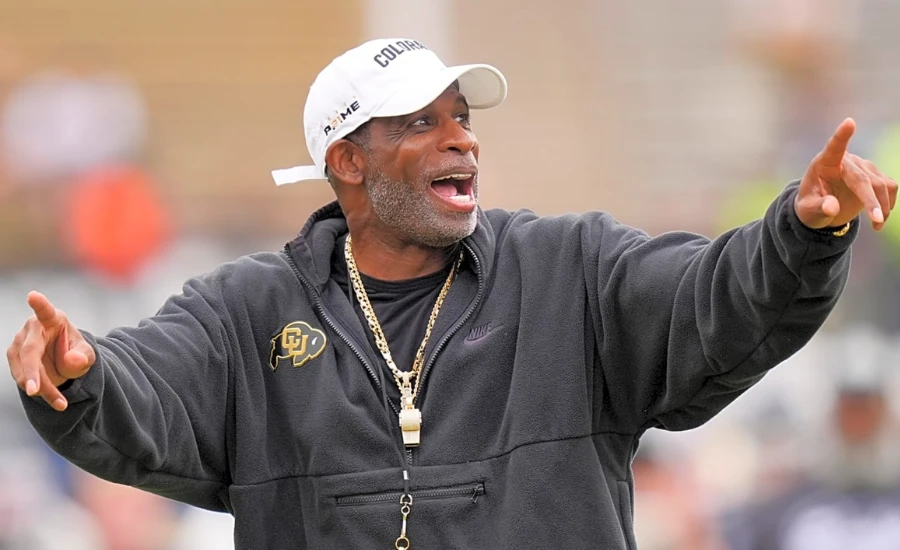

Some athletes get remembered for their trophies. Deion Sanders might end up remembered just as much for his sheer will to survive. Over the past five years, his body has put him through blood clots, two amputated toes, and an aggressive bladder cancer diagnosis, and he’s walked back onto a football sideline every single time.
Quick Facts Table: Deion Sanders’ Health Timeline at a Glance
| Detail | Information |
|---|---|
| Full Name | Deion Luwynn Sanders |
| Born | August 9, 1967 |
| Age (as of 2026) | 58 years old |
| Current Role | Head Coach, University of Colorado Buffaloes |
| 2021 Health Crisis | Foot surgery complications, femoral arterial blood clots, compartment syndrome |
| Toes Amputated | Big toe and second toe, left foot, revealed March 2022 |
| Hospital Stay (2021) | 23 days, most in the ICU, in Mississippi |
| Weight Lost During 2021 Crisis | 40 pounds |
| Later Vascular Surgery | Blood clot procedure in both legs, addressed circulation issues |
| Bladder Cancer Discovery | Spring 2025, found incidentally during vascular monitoring imaging |
| Cancer Type | High-grade, very-high-risk non-muscle-invasive bladder cancer |
| Treatment | Radical cystectomy (bladder removal) and neobladder reconstruction |
| Surgeon/Oncologist | Dr. Janet Kukreja, University of Colorado Cancer Center |
| Public Announcement | July 28, 2025, press conference in Boulder, Colorado |
| Current Cancer Status | Declared cancer-free by his medical team |
| Who He Told Immediately | Oldest son Deion Jr. (“Bucky”) and daughters Shelomi and Deiondra |
| Who He Kept It From Initially | Sons Shedeur and Shilo, then entering their NFL rookie seasons |
| Ongoing Management | Diabetes and vascular health monitoring |
A Body That’s Been Through an Incredible Amount
Deion Sanders is 58 years old, a Pro Football Hall of Famer, and the current head coach of the University of Colorado Buffaloes. Over the last several years, he’s also become something of an unexpected public face for serious health struggles that most people never talk about openly.
His journey involves blood clots that nearly cost him a leg, two amputated toes, ongoing diabetes management, and a genuinely aggressive cancer diagnosis. And through nearly all of it, he kept coaching.
The 2021 Crisis That Started It All
Back in 2021, while serving as head coach at Jackson State, Sanders underwent a procedure to correct a dislocated toe and some nerve issues on his left foot. What should have been a routine fix turned into something far more dangerous.
He developed femoral arterial blood clots, meaning clots formed in one of the major blood vessels running through his thigh, blocking blood flow to his lower leg. On top of that, he developed compartment syndrome, a serious condition where swelling inside the leg cuts off blood supply to the muscles and nerves.
Fighting to Keep His Leg
The situation escalated quickly. Sanders later described the conversations he had with doctors during that crisis, saying, “They were first talking about the amputation of toes, then the amputation of my leg from knee down, and then they were trying to ensure that I had life.”
That’s about as serious as a medical situation can get. Doctors weren’t just discussing losing toes at that point. They were discussing losing his entire leg, and beyond that, simply keeping him alive.
Twenty-Three Days in the ICU
Sanders ended up spending 23 days in a Mississippi hospital, with most of that time in the ICU. He underwent eight separate surgical procedures during that stretch and lost 40 pounds throughout the ordeal.
After being discharged, he spent the remainder of the 2021 college football season coaching from a wheelchair. Despite everything he was going through physically, Jackson State still managed to finish that season with an outstanding record and won their conference championship.
Revealing the Amputation
Sanders didn’t publicly reveal the full severity of what happened until March 2022, when he shared the details through his “Coach Prime” docuseries. Surgeons had amputated his big toe and the toe next to it on his left foot, a direct result of those femoral arterial blood clots.
He described the moment he first saw his surgically altered foot, saying, “I was so heavily medicated, I didn’t remember half the stuff the doctors did, so when I first looked down, it was humbling, because I’ll never run like that again.”
Adjusting to a New Physical Reality
For a man whose entire identity had been built around blinding speed and elite athleticism, losing part of his foot carried a genuinely emotional weight beyond the physical recovery itself. He admitted, “I don’t know if I’m going to wear shorts again,” reflecting the very real self-consciousness that came with such a visible, permanent change.
That kind of honesty is rare from someone so used to projecting confidence. It showed a more vulnerable side of a man known throughout his career for supreme self-assurance.
More Blood Clots, More Surgery
Sanders’ vascular problems didn’t end with the 2021 crisis. Later, while coaching at Colorado, he underwent an additional procedure to address two more blood clots, one in each leg, aimed at restoring proper blood flow throughout his lower body.
This ongoing pattern shows that his 2021 health crisis wasn’t a one-time medical event that simply resolved itself. It represented the start of a much longer, continuing effort to manage serious circulation issues.
Finding Bladder Cancer By Accident
In the spring of 2025, doctors discovered something new entirely. During routine imaging performed specifically to monitor his ongoing vascular health, they found a tumor in his bladder.
This is worth pointing out clearly: the cancer wasn’t found because of any bladder-related symptoms. It was discovered essentially by chance, through monitoring meant for an entirely different health concern, which likely allowed doctors to catch it earlier than they might have otherwise.
An Aggressive Diagnosis
Dr. Janet Kukreja, director of urological oncology at the University of Colorado Cancer Center, later explained the specifics of what they found. She said, “We removed the tumor. It was very high-grade and invading through the bladder wall. “It hadn’t spread into the muscle layer, which is classified as a very high-risk form of non-muscle-invasive bladder cancer.”
That’s a genuinely serious diagnosis. Even though the cancer hadn’t reached the muscle layer of the bladder, its high-grade nature and high recurrence risk meant Sanders and his medical team needed to make a significant decision about treatment.
Choosing the Most Definitive Option
Rather than pursuing ongoing treatment for a cancer type known for a high recurrence rate, Sanders and his doctors decided on a more definitive approach: complete surgical removal of his bladder, known as a radical cystectomy.
Following that removal, surgeons performed neobladder reconstruction, using a section of his own intestine to build a functioning replacement bladder. That’s a genuinely complex, major surgery, not a simple outpatient procedure.
Keeping the Secret From His Sons
In a genuinely touching detail, Sanders revealed he deliberately kept his cancer diagnosis hidden from his two youngest sons, Shedeur and Shilo, throughout their entire ordeal. Both were preparing for their rookie NFL seasons at the time, with Shedeur drafted by the Cleveland Browns and Shilo signing with the Tampa Bay Buccaneers after going undrafted.
He explained his reasoning directly: “I wanted them to really focus on making the team.” That’s a genuinely selfless decision, choosing to carry an enormous personal burden quietly so his sons wouldn’t be distracted during one of the most important stretches of their young careers.
Who He Did Tell
While he kept the news from Shedeur and Shilo, Sanders did share what was happening with his oldest son, Deion Jr., known as “Bucky,” along with his daughters, Shelomi and Deiondra. According to Sanders, all three “have not left” his side since learning the news.
That contrast, choosing silence with two children while leaning on the support of three others, shows just how deliberately Sanders managed who knew what during an incredibly difficult stretch of his life.
The Public Announcement
On July 28, 2025, Sanders held a press conference in Boulder, Colorado, alongside his medical team, publicly revealing his bladder cancer diagnosis and the surgery he’d already undergone. By that point, the surgery and initial recovery were already behind him.
Dr. Kukreja told reporters that Sanders was “cured of cancer,” adding, “I don’t use that word lightly.” She acknowledged the difficulty of the process directly, saying, “This was not an easy task… It was dynamic. It was tough. It wasn’t a cakewalk.”
Leaning on Randy Moss for Support
During the same press conference, Sanders revealed that former NFL star Randy Moss had become an important source of strength for him throughout the ordeal. Moss himself had been diagnosed with bile duct cancer in 2024 and was preparing to return full-time to his broadcasting role at ESPN for the 2025 season.
Having someone who genuinely understood what it meant to fight cancer while still maintaining a demanding public career gave Sanders real, lived support from someone who wasn’t just offering generic encouragement.
Adjusting to Life With a Neobladder
Sanders has spoken candidly, even with humor, about adjusting to life after his surgery. He acknowledged ongoing challenges directly, saying, “Right now, I’m still dealing with going to the bathroom,” making light of a genuinely difficult, private adjustment that neobladder patients commonly face.
That kind of openness about such a personal topic reflects the same pattern seen throughout his health journey: rather than hiding the uncomfortable details, he’s chosen to talk about them directly, even when it’s clearly not easy.
Getting Back to Life Quickly
Just days after his surgery, Sanders shared a video of himself fishing, showing fans a genuinely upbeat, active recovery process. He joked with reporters during his announcement, telling them, “You can clap, it’s O.K.,” embracing the positive news with characteristic humor and confidence.
That kind of quick return to normal activity, even something as simple as fishing, sent a clear signal that he intended to keep living an active life despite everything his body had been through.
Never Missing a Season
Throughout every single one of these health crises, from the 2021 blood clot emergency to the 2025 bladder cancer surgery, Sanders never stepped away from coaching for an extended period. He continued leading his team at Jackson State through his wheelchair recovery, and he confirmed he planned to continue coaching Colorado throughout his 2025 cancer recovery as well.
He said not continuing to coach “never crossed his mind” after his diagnosis, showing just how central football remains to his identity and daily purpose, even in the face of serious, ongoing health challenges.
Managing Diabetes Alongside Everything Else
Beyond the blood clots and cancer, Sanders has also continued managing diabetes throughout this entire period. Diabetes and vascular health issues are closely connected, and his ongoing vascular monitoring, the very same monitoring that ultimately caught his bladder cancer, ties directly back to managing that broader health picture.
This connects several seemingly separate health issues into one larger, ongoing story about chronic disease management rather than a series of unrelated, isolated incidents.
Why His Openness Matters
Bladder cancer is the tenth leading cause of cancer death in the United States, according to the American Cancer Society, with nearly 85,000 new cases estimated in 2025 alone. Despite how common it is, it doesn’t receive nearly the public attention or awareness that other cancers do.
By speaking openly about his diagnosis, his treatment, and even the uncomfortable details of his recovery, Sanders has brought real, mainstream attention to a disease that affects tens of thousands of people every year, many of whom never see their story covered by national media.
Where Things Stand Now
As of the most recent updates in 2026, Sanders continues to be considered cancer-free by his medical team. He remains active as head coach of the Colorado Buffaloes, continuing to manage his diabetes and ongoing vascular health as part of his regular medical care.
His medical journey, from a routine foot surgery gone wrong to a life-threatening vascular emergency to a serious cancer diagnosis, represents one continuous, connected story rather than a series of unrelated bad luck.
Final Words
Deion Sanders’ health story is genuinely remarkable, not because he avoided serious illness, but because of how directly he’s chosen to confront and discuss it. He lost two toes and nearly lost his leg. He faced an aggressive cancer diagnosis that required his entire bladder to be removed. Through each of those experiences, he continued working, remained committed to coaching, and, in time, began speaking openly about them.
That kind of transparency, especially from someone whose public image was built entirely around physical dominance and confidence, genuinely matters. It shows that even someone who once defined athletic perfection can face real, serious health struggles, and still find the strength to keep showing up.
FAQ About Deion Sanders’ Health
Q1. What health problems has Deion Sanders had?
He’s dealt with severe blood clots and compartment syndrome that led to two toe amputations in 2021, additional blood clot surgery in both legs later on, ongoing diabetes management, and an aggressive bladder cancer diagnosis in 2025.
Q2. Why did Deion Sanders have his toes amputated?
Following a 2021 foot surgery, he developed femoral arterial blood clots and compartment syndrome, which led doctors to amputate his big toe and second toe on his left foot to save the rest of his leg.
Q3. Did Deion Sanders almost lose his leg?
Yes, doctors initially discussed the possibility of amputating his leg below the knee before ultimately being able to save it by removing two toes instead.
Q4. When was Deion Sanders diagnosed with bladder cancer?
He was diagnosed in the spring of 2025, with the tumor discovered incidentally during imaging related to his ongoing vascular health monitoring.
Q5. What kind of bladder cancer did Deion Sanders have?
He had high-grade, very-high-risk non-muscle-invasive bladder cancer, meaning the tumor had not yet spread into the bladder’s muscle layer but carried a high risk of recurrence.
Q6. What treatment did Deion Sanders receive for bladder cancer?
He underwent a radical cystectomy, meaning complete removal of his bladder, followed by neobladder reconstruction using a section of his own intestine.
Q7. Is Deion Sanders cancer-free now?
Yes, his medical team, led by Dr. Janet Kukreja, has declared him cancer-free following his surgery.
Q8. Did Deion Sanders tell his sons about his cancer diagnosis?
He initially kept the diagnosis hidden from his sons Shedeur and Shilo, who were entering their NFL rookie seasons, so they could stay focused. He did tell his oldest son, Deion Jr., and his daughters, Shelomi and Deiondra.
Q9. When did Deion Sanders publicly announce his cancer diagnosis?
He held a press conference on July 28, 2025, in Boulder, Colorado, revealing the diagnosis and his subsequent treatment.
Q10. Did Deion Sanders continue coaching during his health struggles?
Yes, he coached Jackson State from a wheelchair during his 2021 recovery and continued coaching Colorado throughout his 2025 cancer treatment and recovery.
Q11. Who supported Deion Sanders during his cancer diagnosis?
He specifically credited former NFL star Randy Moss, who had also battled cancer, as an important source of strength during his own diagnosis and treatment.
Q12. Does Deion Sanders have diabetes?
Yes, he continues to manage diabetes alongside his other ongoing health concerns, including vascular monitoring.
Q13. How old is Deion Sanders?
He was born on August 9, 1967, making him 58 years old as of 2026.
Q14. What is a neobladder?
It’s a surgically reconstructed bladder built using a section of the patient’s own intestine, designed to take over urinary function after the original bladder is removed.
Q15. How common is bladder cancer?
According to the American Cancer Society, it’s the tenth leading cause of cancer death in the United States, with an estimated nearly 85,000 new cases in 2025, more than 65,000 of them in men.
Unlock knowledge, discover opportunities, and stay connected with Discover Released