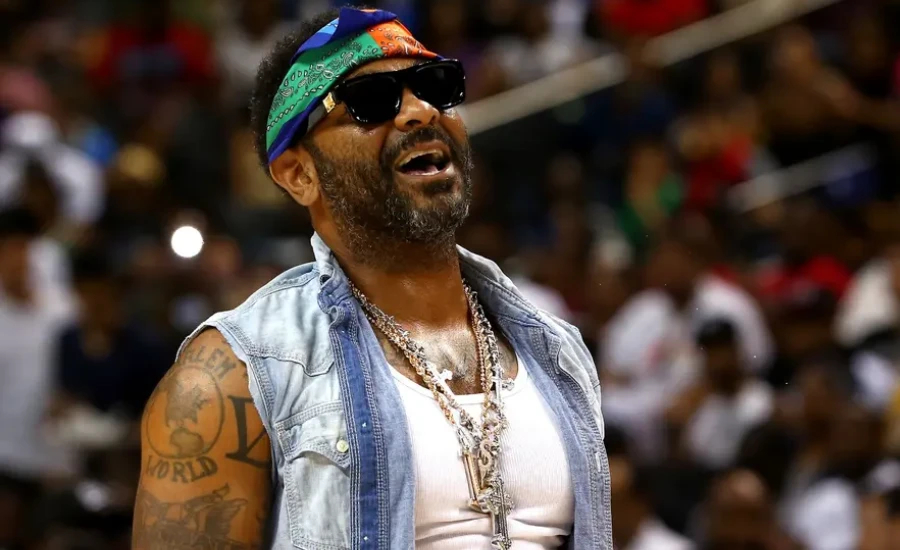

There’s a moment in Jim Jones’s story that says everything about the gap between fame and fortune in hip-hop. Around 2006, he was riding the biggest wave of his career. “We Fly High” was everywhere. Dipset was a cultural movement. His name meant something across New York and far beyond it.
Then, years later, reports surfaced of a foreclosed New Jersey home and over a million dollars in unpaid mortgage debt.
That’s not a story about failure. It’s a story about how the music business actually works — and how even a platinum-certified anthem doesn’t guarantee financial security.
Let’s go through the real numbers honestly.
Quick Bio Facts
| Detail | Information |
|---|---|
| Full Name | Joseph Guillermo Jones II |
| Stage Name | Jim Jones |
| Born | July 15, 1976 |
| Birthplace | Born in the Bronx, New York (raised in Harlem) |
| Heritage | Aruban mother, Puerto Rican father |
| Grandmother | Raised him in the Taft Houses project in East Harlem |
| Sisters | Precious and Keisha |
| School | Attended Catholic school; frequently skipped classes |
| Childhood Friend | Cam’ron, Freekey Zekey |
| First Appearance | Cameo on New York Undercover (1996) |
| Group | The Diplomats (Dipset) — co-founded with Cam’ron, 1997 |
| Dipset Debut Album | Diplomatic Immunity (2003) — Gold certified, #1 US R&B |
| Solo Debut | On My Way to Church (2004) |
| Biggest Hit | “We Fly High” (2006) — Platinum, #1 US Rap, #5 Billboard Hot 100 |
| Second Biggest Hit | “Pop Champagne” (2008) |
| Latest Album | At the Church Steps (February 27, 2025) |
| Labels/Ventures | ByrdGang Records (founder); Diplomat Records (co-CEO with Cam’ron) |
| Clothing Lines | Nostic; Vampire Life (co-founded with Damon Dash) |
| TV | Love & Hip Hop (VH1); Chrissy & Mr. Jones (2012–2013) |
| Sports | Part-owner, Richmond Roughriders (since December 2017) |
| Partner | Chrissy Lampkin (together since early 2000s; proposal on Love & Hip Hop in 2014) |
| Son | Joseph Jones III (known as Capo) |
| Jim Jones Net Worth | ~$400,000 (most credible sources); TheRichest says $10 million (disputed) |
| Foreclosure | New Jersey home bought for $680,000 in 2006; foreclosed after mortgage debt reached $1.24 million |
An Honest Note on the Net Worth Figures
The number attached to Jim Jones’s name varies depending on where you look. Celebrity Net Worth, the most widely cited entertainment wealth database, puts his current net worth at approximately $400,000. Millennial Magazine, Motoelectro, Studio 359, and Chemical City Paper all confirm the same ballpark figure.
TheRichest lists $10 million. That figure appears to be outdated and likely reflects estimates from his peak earning years in the mid-2000s rather than his current financial standing.
This article goes with the $400,000 figure as the most current and most frequently corroborated estimate. It explains the gap between that number and what people remember from his “Ballin'” era, because that gap is actually the most interesting part of the whole story.
Born in the Bronx, Made in Harlem
Jim Jones came into the world on July 15, 1976, at a hospital in the Bronx. His mother was of Aruban descent. His father was Puerto Rican. When his father died and his mother’s work schedule made full-time parenting difficult, his maternal grandmother stepped in.
She raised him in the Taft Houses, a public housing project in East Harlem. Jim himself described growing up there with a phrase that stuck: “the gutter within the gutter.” He wasn’t romanticizing it. He was being precise about what it was.
Catholic school was where he was supposed to spend his days. Instead, he skipped. He would go to train stations, hang around his neighborhood, and absorb the rhythms of Harlem street life. He got expelled. He stole from corner stores. He was a Harlem kid finding his own education.
Two friendships formed during those years that changed everything. One was with Cam’ron. The other was with Freekey Zekey. Those connections became the backbone of everything Jim Jones would build professionally.
The Dipset Years: When Harlem Ruled New York
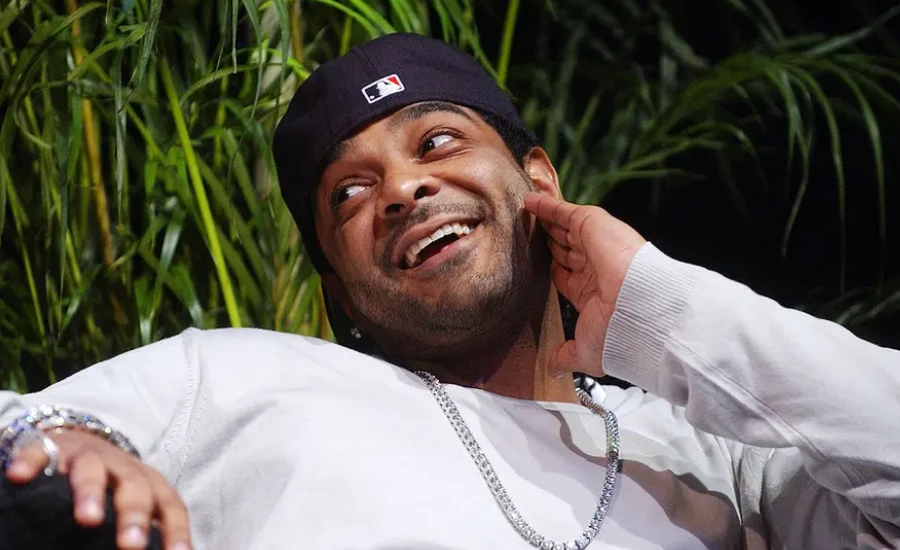
In 1997, Jim Jones and Cam’ron co-founded The Diplomats, the rap collective the world would come to know as Dipset. Juelz Santana and Freekey Zekey came with them.
Before he was an official member of anything, Jim was already serving as Cam’ron’s hype man. He had the voice, the presence, and the Harlem energy. He was the backup that made the main act feel bigger.
Dipset’s debut album, Diplomatic Immunity, arrived in 2003. It went Gold. It hit number one on the US R&B chart and number eight on the Billboard 200. The sound was aggressive, proud, and entirely rooted in Harlem. Their fashion, their attitude, their slang — all of it spread beyond New York and became a cultural moment.
They weren’t just a rap group. They were a movement for a few years, and Jim Jones was at its center.
Going Solo: The Climb Toward “We Fly High”
In 2004, Jim Jones stepped out on his own. His debut solo album, On My Way to Church, came out that year. It peaked at number 18 on the Billboard 200, number three on the Independent Albums chart, and number four on the Top R&B/Hip-Hop Albums chart. Not a smash, but solid.
He followed that release with Harlem: Diary of a Summer in 2005, which achieved even greater commercial success. The album climbed to No. 5 on the Billboard 200 while also reaching the top spot on the R&B/Hip-Hop Albums and Independent Albums charts. Around that period, he also took on an executive role at Entertainment One Music, then known as Koch Records, as his career continued to expand on multiple fronts.
Then came 2006. And “We Fly High.”
The Song That Defined Him
“We Fly High” came out as the lead single from his third solo album, Hustler’s P.O.M.E. (Product of My Environment). That album landed in the top ten of the Billboard 200.
But the song was the thing. The “Ballin'” hook became a catchphrase across America. It was inescapable for a stretch of months. It hit number one on the US Rap chart. The track climbed to No. 5 on the Billboard Hot 100 and later received Platinum certification from the Recording Industry Association of America.
That’s a real hit. Not a moderate success. An actual cultural moment.
“Pop Champagne” followed in 2008 as his second significant commercial success. And he kept releasing: Harlem’s American Gangster in 2008, Pray IV Reign in 2009, Capo in 2011, El Capo in May 2019, and most recently At the Church Steps on February 27, 2025 — a deliberate callback to his first album’s title.
The Business Side: Records, Clothes, and Sports
Jim Jones didn’t stop at music. He tried to build around it.
He co-founded ByrdGang Records and released music through it, including the ByrdGang group album M.O.B.: The Album in 2008, which peaked at number 29 on the Billboard 200. He served as co-CEO of Diplomat Records alongside Cam’ron.
In fashion, he created the Nostic clothing line, described as blending urban and high-end influences. He also co-founded Vampire Life Clothing with Damon Dash, the former Roc-A-Fella Records executive and longtime Harlem figure.
Television helped introduce him to audiences beyond the music world. He joined the cast of Love & Hip Hop on VH1, broadening his public profile, and later co-starred with Chrissy Lampkin in their spin-off series, Chrissy & Mr. Jones. The show aired from 2012 to 2013 and offered viewers a closer look at their life together and relationship.
In December 2017, he became a part-owner of the Richmond Roughriders, a team in the American Arena League. Sports ownership, even at a smaller league level, signals a desire to build assets beyond entertainment income.
The Home Foreclosure: Where the Money Story Gets Real

This is the part that explains the gap between “Ballin'” and $400,000.
In 2006, at the height of his success, Jim Jones and Chrissy Lampkin bought a home in New Jersey for $680,000. The mortgage was structured at a 6.875% interest rate, which put their monthly payments at around $4,500.
Payments on that mortgage stopped around 2010. The bank didn’t move immediately. But by 2017, a lawsuit from the National Bank Association revealed how far the debt had grown — interest had pushed the total past $1.24 million. The bank moved to foreclose, and they did.
This is not an unusual story in hip-hop. It is, in fact, a very common one. Album cycles end. Radio moves on. Touring revenue drops. Lifestyle expenses remain high. And unless an artist has diversified into genuinely stable income-generating assets, the money that came in from a platinum single doesn’t sit in an account waiting to be used years later.
Jim Jones lived large during his peak years. That’s what the music and the image required. The cost of that lifestyle, combined with slowing income, produced the financial situation that now puts Jim Jones Net Worth well below what fans from 2006 might expect.
The Feuds: Jay-Z, Tru Life, ASAP Mob, and More
Jim Jones has never shied away from conflict. Several public disputes marked his career.
When rapper Tru Life directed insults at Cam’ron and Jim, Jones responded publicly by challenging him to a fight with a $50,000 wager attached. Diss tracks followed.
His dispute with Jay-Z had different roots. After Jones criticized Jay-Z’s leadership at Def Jam Records, Jay responded with a diss track using the beat from “We Fly High” and renaming it “Brooklyn High.” Physical confrontations followed in Manhattan, and Jones later pleaded guilty to assault related to an incident at a store there.
He clashed with ASAP Mob over questions of street credibility. A briefer social media dispute with Azealia Banks involved the word “vamp,” a term associated with his Vampire Life brand.
These conflicts kept his name circulating in rap conversations but also carried real-world consequences — including the assault conviction — that added to the complications of his overall story.
The Cam’ron Feud: Dipset at War With Itself

In December 2024, a new chapter of conflict opened. Cam’ron appeared on 50 Cent’s podcast “It Is What It Is” and said he felt disrespected when he brought Jim Jones out during a 2007 show at the height of 50 Cent and Cam’ron’s own feud. The implication was that Jones’s appearance had undermined Cam’ron during a sensitive moment.
Jim Jones took exception publicly. The exchange escalated into a genuine falling-out between two men who had built their careers together over nearly three decades.
Cam’ron publicly questioned Jim’s Harlem roots in a Billboard interview in January 2025, saying Jones had been a fan rather than a peer. That comment, from his oldest collaborator and the man he built Dipset with, was a serious statement.
The feud was still unresolved publicly as of 2026.
Personal Life: Chrissy Lampkin and Family
Jim Jones has been with Chrissy Lampkin since the early 2000s. Their relationship unfolded publicly on Love & Hip Hop, and during an episode in 2014, he proposed to her on air.
Whether the marriage proceeded officially has not been confirmed publicly. They have remained connected through television and personal life regardless of formal marital status.
He has a son named Joseph Jones III, known by the nickname Capo.
What Jim Jones Net Worth Actually Reflects
At approximately $400,000, Jim Jones’s current net worth is lower than fans of “We Fly High” era might expect. The honest explanation is straightforward.
The music industry takes a significant cut at every level: label deals, management fees, production costs, video budgets, touring expenses, and the cost of maintaining the image that rap success requires. Platinum certification doesn’t mean the artist pockets millions. It means the song sold millions of units, after which money flows through multiple hands before any share reaches the artist.
Jim Jones operated as an independent artist for much of his career, which gave him more control but also more financial exposure when revenues slowed. His business ventures — clothing lines, a record label, a sports team stake — reflect genuine attempts to diversify. But none of those appeared to generate the kind of stable, compounding wealth that would push Jim Jones Net Worth significantly higher.
The foreclosure is the clearest indicator that peak income was not converted into lasting financial security.
Why He Still Matters
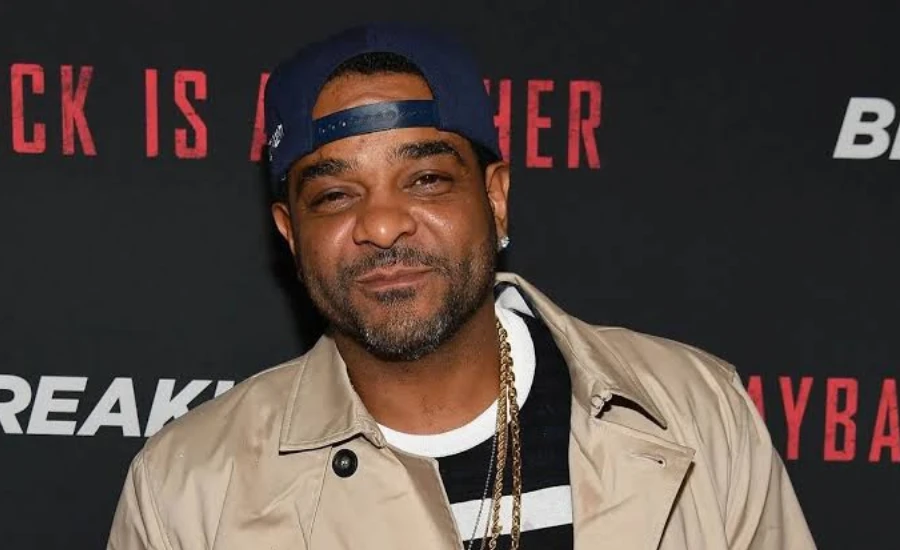
Despite the financial picture, Jim Jones’s cultural weight in hip-hop remains real.
He co-founded one of the most influential rap collectives in New York history. He released a platinum hit that became a genuine cultural moment. He shaped how Harlem sounded and dressed to a generation of fans and younger artists who absorbed Dipset’s influence without necessarily knowing the source.
He performed “We Fly High” at the BET Awards in 2025, nearly twenty years after the song’s release, to a crowd that clearly still knew every word. He released his eighth studio album in February 2025.
At 48 years old, he is still making music, still representing Harlem, and still in the conversation.
Final Words
Jim Jones’s net worth story is really a story about the music business. A kid from Harlem’s housing projects co-builds one of the most influential rap groups of his generation, has a platinum hit that owns the radio for months, appears on reality television, starts clothing lines and a record label, buys a house in New Jersey — and ends up with an estimated $400,000 net worth two decades later.
That gap isn’t shameful. It’s instructive. It’s what happens when industry fees, lifestyle costs, slowing revenue, and financial missteps compound over time in a business that moves incredibly fast and remembers you only as long as the current hit is playing.
Jim Jones built something real and lasting in hip-hop. What he built financially turned out to be more fragile. Both of those things can be true at the same time.
Next Read: Leo Skepi Net Worth