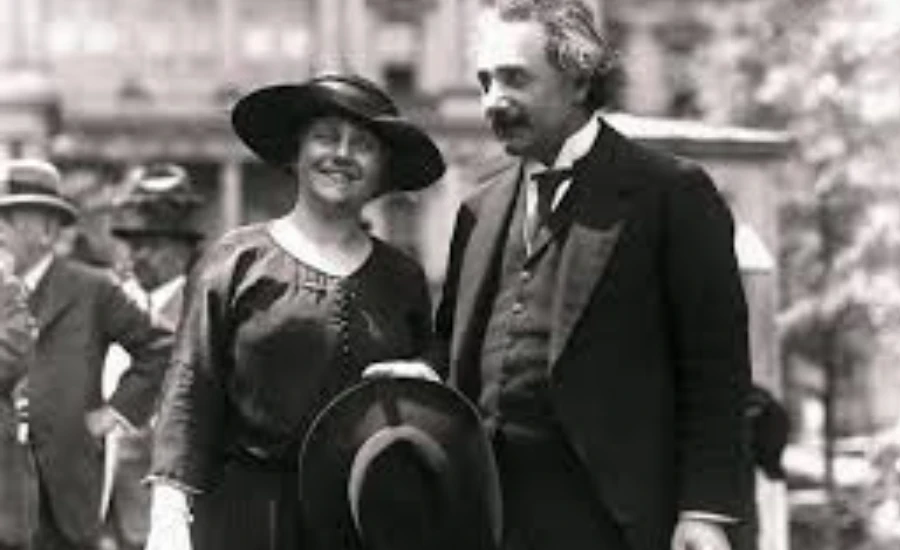

Quick Bio Facts
| Fact | Details |
|---|---|
| Full Name | Elsa Einstein Löwenthal |
| Birth Date | January 18, 1876 |
| Birth Place | Hechingen, Germany |
| Death Date | December 20, 1936 |
| Death Place | Princeton, New Jersey, USA |
| Age at Death | 60 years old |
| Relation to Albert | Maternal first cousin, paternal second cousin |
| First Marriage | Max Löwenthal (1896-1908) |
| Second Marriage | Albert Einstein (1919-1936) |
| Children (from first marriage) | Ilse (1897-1934), Margot (1899-1986), One son (died in infancy) |
| Nationality | German |
| Religion | Jewish |
| Notable Role | Manager of Albert Einstein’s household and public life |
A Small-Town Girl with Big Dreams
Before she became known as the second wife of the world’s most famous scientist, Elsa Einstein was simply a girl growing up in a quiet German town. Her father Rudolf worked in textiles, running a business in Hechingen. Her mother Fanny came from the same extended family as Albert’s mother—they were actually sisters. This family connection would later change Elsa’s entire life.
Young Elsa Einstein had two sisters. Her childhood was ordinary for a girl of her time and class. She received the schooling typical for young women then, which meant she learned household skills, some languages, and cultural refinements. Nobody recorded much about her actual education, but we know she grew up in a comfortable, middle-class Jewish household.
Childhood Memories with “Albertle”
The Einstein and Koch families visited each other often in Munich during family gatherings. When Albert and Elsa’s families got together, the children would play. Elsa Einstein was four years older than Albert, but that didn’t matter much when they were kids playing together.
Elsa Einstein gave Albert a local nickname in her regional accent—she called him “Albertle.” It was a cute, informal way of saying his name. These childhood moments created a bond between them, even though they didn’t see each other regularly. In 1894, when Albert’s family moved away to Italy, the two youngsters lost touch. Life took them in different directions.
The Years in Between: A Different Path
While her cousin Albert went off to study physics and become a scientist, Elsa Einstein’s life followed a more typical path for a woman of her era. In 1896, when she was twenty years old, she married Max Löwenthal. He was a successful textile merchant from Berlin. Together they created a household and started a family.
The couple had two daughters. Ilse arrived first, born in 1897. A few years later, they welcomed Margot into the family in 1899. They also had a son, but sadly he didn’t survive infancy. This tragedy, common in that era, left deep marks on families. Elsa Einstein and Max raised their growing family in Hechingen for several years.
In 1902, Max’s career led him to Berlin, where new professional opportunities awaited. He relocated to the city to pursue his work, while his wife and children remained in the family home they had established. Although the arrangement likely brought challenges for all involved, it was a practical solution given the circumstances of the time.
A Turning Point in Life
By 1908, the marriage between Elsa and Max had broken down. The reasons are lost to history, but the couple decided to divorce. This was a significant step for a woman in her time—divorce carried social stigma, and women often faced judgment.
After the split, Elsa and her two daughters moved to Berlin. They found an apartment above her parents’ place on Haberlandstrasse. Being back near her family gave Elsa support during this challenging transition. She went back to using her maiden name—Einstein—and raised her girls independently.
For several years, Elsa lived quietly. She managed her household, cared for her daughters, and moved through Berlin’s society. She had become part of a wide social circle that included artists, writers, businesspeople, and political figures. She was no longer just a housewife—she was an independent woman, which was quite remarkable for the time.
A Cousin Comes Back Into Her Life
In 1912, something unexpected happened. Albert Einstein came to Berlin for work. He had taken a professor position at the University of Berlin. When he arrived in the city, he naturally visited his relatives. He reconnected with his cousin Elsa Einstein, who was now a mature woman in her mid-thirties.
But there was a complication. Albert was married at the time—to a woman named Mileva Marić, a physicist he had married years earlier in Switzerland. Yet his marriage had been falling apart. Letters show that Albert and Mileva were deeply unhappy. Their relationship had become cold and distant.
Around this same time, Albert and Elsa began spending time together. They developed feelings for each other. Albert wrote letters to Elsa expressing his attraction and his longing for her presence. This was not a secret fling—it happened rather openly, and people knew about it.
In 1914, Albert’s family situation changed dramatically. His wife took their two sons and moved back to Switzerland. Albert, meanwhile, settled in Berlin. He moved into an apartment in the same building as Elsa and her daughters. This living arrangement made it easy for them to see each other regularly.
When Sickness Became a Turning Point
In 1917, Albert became gravely ill. His health collapsed. He suffered from stomach problems and other complaints. He was so sick that people worried he might not recover. This was the moment when Elsa Einstein stepped in completely.
She nursed him back to health. She took care of him day and night. She made sure he ate properly, rested, and had everything he needed. During those difficult months, Elsa became Albert’s caregiver, his support, and his closest companion. She proved herself absolutely dedicated to helping him survive this crisis.
This experience brought them even closer together. Albert came to depend on Elsa not just romantically but also practically. She had shown him that she would stand by him through anything.
A Marriage Finally Comes Together
Following years of delay, Albert’s marriage to Mileva officially ended in early 1919. A few months later, in June, he married Elsa Einstein in Berlin. The couple chose a civil ceremony without any religious observances. The event was modest and understated, focused simply on formalizing their union rather than marking the occasion with an elaborate celebration.
Now the household was complete. Elsa’s two daughters became Albert’s stepdaughters. He treated them as his own. He was kind to them, involved in their lives, and gave them his affection. Ilse even worked as his secretary for a period. The blended family seemed to function well.
Albert was finally married to someone he actively chose and who actively chose him. Elsa was married to a man who was becoming increasingly famous. Neither of them could have predicted how much his fame would grow in the coming years.
The Rise of a Celebrity
By the early 1920s, Albert Einstein had become the most famous scientist on Earth. The proof of his theory of relativity through the solar eclipse created a sensation. Suddenly, his face was known everywhere. People wanted to meet him, hear from him, and spend time with him.
As Albert’s popularity exploded, Elsa Einstein became his manager. She handled his schedule. She managed his appointments. She dealt with the thousands of letters that arrived at their home from people around the world. She managed the family finances and made sure everything ran smoothly.
But her most important job was protection. People constantly tried to see Albert, to demand things from him, to use his fame for their own purposes. Elsa Einstein became like a security guard for her husband’s time and energy. She politely but firmly turned people away. She kept charlatans and fortune seekers from reaching him. She made sure he had quiet time to think and work.
When Albert won the Nobel Prize for Physics in 1921, Elsa was there beside him. The couple traveled to the United States together that same year. They were helping to raise money for a Jewish homeland in Palestine. They visited major American cities. Photographs show them boarding ships and attending ceremonies. Elsa was always calm and composed beside her increasingly famous husband.
Managing the Work Until a Secretary Arrived
For about ten years, Elsa Einstein handled most of Albert’s business matters herself. She kept his calendar. She answered letters. She arranged his trips. She was, in many ways, his first secretary and office manager combined.
In 1928, however, a professional secretary named Helen Dukas was hired to help with the paperwork. This freed Elsa from some of the administrative burden. But she didn’t step back from protecting Albert. Even with a secretary handling the written work, Elsa remained the guardian of Albert’s private life and personal space.
A Summer Paradise
In 1929, something special happened. Elsa Einstein found a beautiful property in Caputh, a small village near Berlin. The location was perfect—it sat on a hill overlooking the lakes, surrounded by pine trees. She convinced Albert that they should build a summer house there. He agreed enthusiastically.
Elsa worked with the architect to design exactly what they wanted. She was the driving force behind the project. The resulting house was made of wood and built using modern construction methods. It had small rooms (just as Elsa wanted), a fireplace, French windows, and terraces with beautiful views.
Between 1929 and 1932, the family spent much of each year there, typically from April through November. Albert cherished his time in the area. He enjoyed wandering through the surrounding forests, sailing on the lake, and sharing quiet moments with close friends. Looking back, he regarded those years as among the most rewarding and enjoyable of his life.
Elsa Einstein organized outings for the family. She made sure everything ran perfectly. She managed the household staff. She handled all the details that allowed Albert to simply enjoy the peace and quiet he craved. It was one of her greatest accomplishments—creating a space where her brilliant but demanding husband could truly relax.
The Shadows Grew Longer
Not everything in their marriage was perfect. History has revealed some uncomfortable truths. Albert, despite being married to Elsa Einstein, continued to have romantic interests in other women. He had affairs. He was emotionally distant at times. He could be self-centered and uncaring about Elsa’s feelings.
Most shockingly, in 1918 before they even married, Albert had proposed to Elsa’s daughter Ilse. Ilse saw him as a father figure, not a husband, and she refused. Yet Albert pursued her for a time. This must have been incredibly painful for Elsa Einstein, but somehow she accepted it and they married anyway.
Even during their marriage, Albert had relationships with other women. He justified his behavior by saying he believed people should do what they enjoyed. He wrote that monogamy felt like a burden to him. Elsa found out about these affairs, and it hurt her deeply.
Yet Elsa stayed. She accepted Albert’s flaws. She chose to remain by his side. She loved him despite his shortcomings. As her illness grew worse in later years, even Albert seemed to realize how much he cared for her. But by then it was too late to truly make amends.
Fleeing Darkness
The political climate in Germany grew increasingly dangerous during the 1930s as Adolf Hitler and the Nazi Party gained control. Anti-Jewish persecution intensified under the regime, placing Albert at significant risk because of both his heritage and public prominence. Nazi officials dismissed his work as “Jewish science” and launched persistent attacks on his scientific ideas and achievements.
In 1933, while Albert was traveling in the United States, he learned something terrible. The Nazi government had searched their summer house in Caputh. They had seized their property. It was clear they could not go back.
Elsa Einstein supported the decision to leave Germany. She understood the danger they faced. She was willing to start over in a new country. The couple decided to settle in Princeton, New Jersey, where Albert had been offered a position at the Institute for Advanced Study.
When they arrived in America in October 1933, Elsa and Albert were starting life as refugees. They would rebuild in this new place. What they didn’t know was how little time Elsa had left.
A Mother’s Heartbreak
Barely a year after arriving in Princeton, Elsa Einstein received devastating news. Her daughter Ilse had fallen ill in Paris. She was diagnosed with cancer. Elsa made the difficult decision to leave her new home and travel to Paris to be with her dying daughter.
She spent her final weeks with Ilse, watching her suffer and fade away. Ilse died in 1934, taking a piece of Elsa’s heart with her. This loss was crushing for a mother who had sacrificed so much for her children. When Elsa Einstein returned to America, she carried grief and exhaustion with her.
Her other daughter Margot eventually made the move to New Jersey to be with her mother. This brought some comfort, but nothing could fill the void left by Ilse’s death.
A Body That Failed Her
By the autumn of 1935, Elsa’s own health began to fail. She developed a swollen eye. Doctors examined her and discovered something serious—her heart and kidneys were damaged. The stress of fleeing her homeland, losing her daughter, and starting over had taken a physical toll.
Elsa became increasingly bedridden. She could not do the things she had always done. She could not manage the household or care for Albert or move about freely. She spent her days in bed, her body betraying her.
Albert, for all his flaws, did step in to care for her in her final months. He spent time by her bedside. He attended to her needs. Yet he also retreated into his work—it was always his way to escape emotional pain through science. Still, those who knew them said that in watching Elsa suffer, Albert finally seemed to truly understand how much she mattered to him.
In the summer of 1936, they rented a cottage near Saranac Lake in upstate New York, hoping the mountain air might help her recover. For a brief moment, Elsa seemed better. But the improvement didn’t last. Winter came, and she grew weaker.
The End
On December 20, 1936, Elsa Einstein died. She was only sixty years old. Her heart finally gave out. She passed away in the house on Mercer Street in Princeton, the place she had tried to make into a home in this foreign land.
Albert was devastated, though he didn’t show it openly. He continued with his work and his life. But he had lost the one person who had stood by him, managed his world, and protected him from everything except his own nature.
The Legacy of a Quiet Woman
Elsa Einstein was never a scientist. She didn’t make discoveries or write papers. She didn’t change the world through her own intellect or research. But she made it possible for someone else to do those things. She was the invisible force behind one of history’s greatest minds.
She took care of details so Albert could focus on thinking. She handled people so he could stay in his work. She managed money so he could pursue ideas. She protected him from the chaos of celebrity so he could have the peace he needed.
For seventeen years, she stood beside him. She loved him, supported him, and remained loyal even when he didn’t deserve it. She raised her own children and helped raise his. She created a home in Berlin, a paradise in Caputh, and a refuge in Princeton.
In the end, Elsa’s story is about quiet strength. It’s about the person behind the famous person. It’s about how much work goes into supporting genius, and how little recognition that work receives. But her influence lasted long after her death—Albert’s most productive years were the years he spent with Elsa.
Also Read: Dolphia Parker
Frequently Asked Questions About Elsa Einstein
Q1: Were Elsa and Albert Einstein closely related?
A: Yes, they were related through both sides of their families. Elsa’s mother was the sister of Albert’s mother, making them maternal first cousins. Additionally, Elsa’s father and Albert’s father were first cousins, making them paternal second cousins. This double family connection was unusual but not unknown in extended Jewish families of their time.
Q2: Did Elsa know Albert when they were children?
A: Absolutely. The families visited each other regularly in Munich when the children were young. Albert and Elsa played together as kids. Elsa even called him “Albertle” in her local Swabian dialect. However, they lost touch after Albert’s family moved to Italy in 1894 when he was a teenager.
Q3: How long was Albert married to Elsa?
A: Albert and Elsa shared seventeen years of marriage, beginning on June 2, 1919, and ending with her death on December 20, 1936. Their time together was slightly longer than Albert’s marriage to Mileva Marić, which lasted roughly sixteen years before the relationship ultimately came to an end.
Q4: Did Elsa have any children with Albert Einstein?
A: Albert and Elsa did not have children together. Elsa entered the marriage with two daughters from her previous marriage to Max Löwenthal, and they became an important part of Albert’s family life. He developed a close bond with both girls and cared for them with the affection and attention of a devoted parent.
Q5: What was Elsa’s education and career background?
A: Elsa received a basic education typical for women of her social class and era. She did not pursue higher education or a scientific career. Instead, she became a homemaker and manager. After her divorce from her first husband, she became an independent woman managing her own household and finances. Later, as Albert’s wife, she became his primary manager and secretary until a professional secretary was hired in 1928.
Q6: How did Elsa help Albert during his rise to fame?
A: Elsa played a crucial role in managing every aspect of Albert’s public and private life. She handled his appointment schedule, managed his correspondence, arranged his travel, and dealt with his finances. More importantly, she protected him from unwanted visitors and those seeking to exploit his fame. She accompanied him on his lecture tours around the world and made sure he had the peace and quiet he needed to continue his work.
Q7: What was the Caputh summer house and why was it important?
A: In 1929, Elsa found a beautiful property in Caputh, a village near Berlin, and was instrumental in building a summer residence there. The house overlooked the lakes and was surrounded by forests. Albert loved spending time there, describing it as some of the best years of his life. He would sail, take walks, and entertain guests. The family stayed there from spring through autumn each year until 1932.
Q8: How did Elsa cope with Albert’s infidelities?
A: This is one of the painful aspects of their marriage. Albert had romantic interests in other women, including shockingly his own stepdaughter Ilse before they married, and affairs during their marriage as well. Elsa was deeply hurt by this. However, she chose to stay with Albert, accepting his flaws and his justifications about his behavior. She remained devoted to him despite this pain.
Q9: What happened to Elsa’s family when they fled Nazi Germany?
A: When the Einstein family fled to Princeton in 1933, Elsa’s daughter Margot came with them. Her other daughter Ilse was in Paris and became ill with cancer. Elsa traveled to Paris to be with Ilse in her final days. Ilse died in 1934, a blow that deeply affected Elsa. Margot later joined her mother in Princeton and remained with her until Elsa’s death.
Q10: What were Elsa’s personality traits and how did people describe her?
A: Those who knew Elsa described her as practical, sensible, and devoted. She had a strong personality and was known for her protective nature regarding Albert. She was social and cultivated a wide circle of acquaintances among Berlin’s cultural and scientific communities. She was also known for her vanity—she had poor eyesight but refused to wear glasses, which led to at least one story about her mistaking a flower arrangement for salad at a dinner party.
Explore More Detailed Profiles And Biographies On Discover Released.